Strategy 4 Enhance intersection design and safety during the buildout of the All Ages and Abilities Network.
The actions within this strategy are divided into two categories:
Action we will DOActions we will SUPPORTAction we will do are followed by “DO” and are colored in dark gray, and actions we will support are followed by “SUPPORT” and are colored in light gray.
Learn more about how we get thereMinneapolis crash data shows that 80% of bicycle crashes happen at an intersection – 48% at signalized intersections and 32% at stop signs.1 Focusing design strategies on the intersection to minimize exposure and risk from vehicles is key to improving safety and comfort for bicyclists. An added benefit is that improved conditions for bicyclists tends to increase comfort, reduce crossing distances, and improve visibility for pedestrians. A key focus of this strategy is building protected intersections. Protected intersections better protect bicyclists travelling through the intersection through the inclusion of design treatments like vertical separation elements and turning wedges.
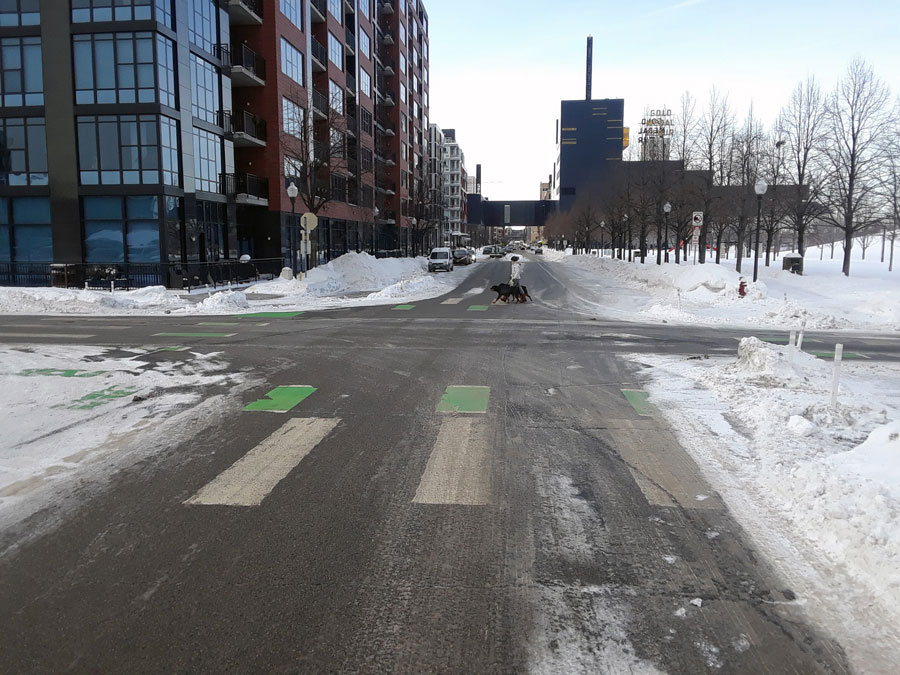
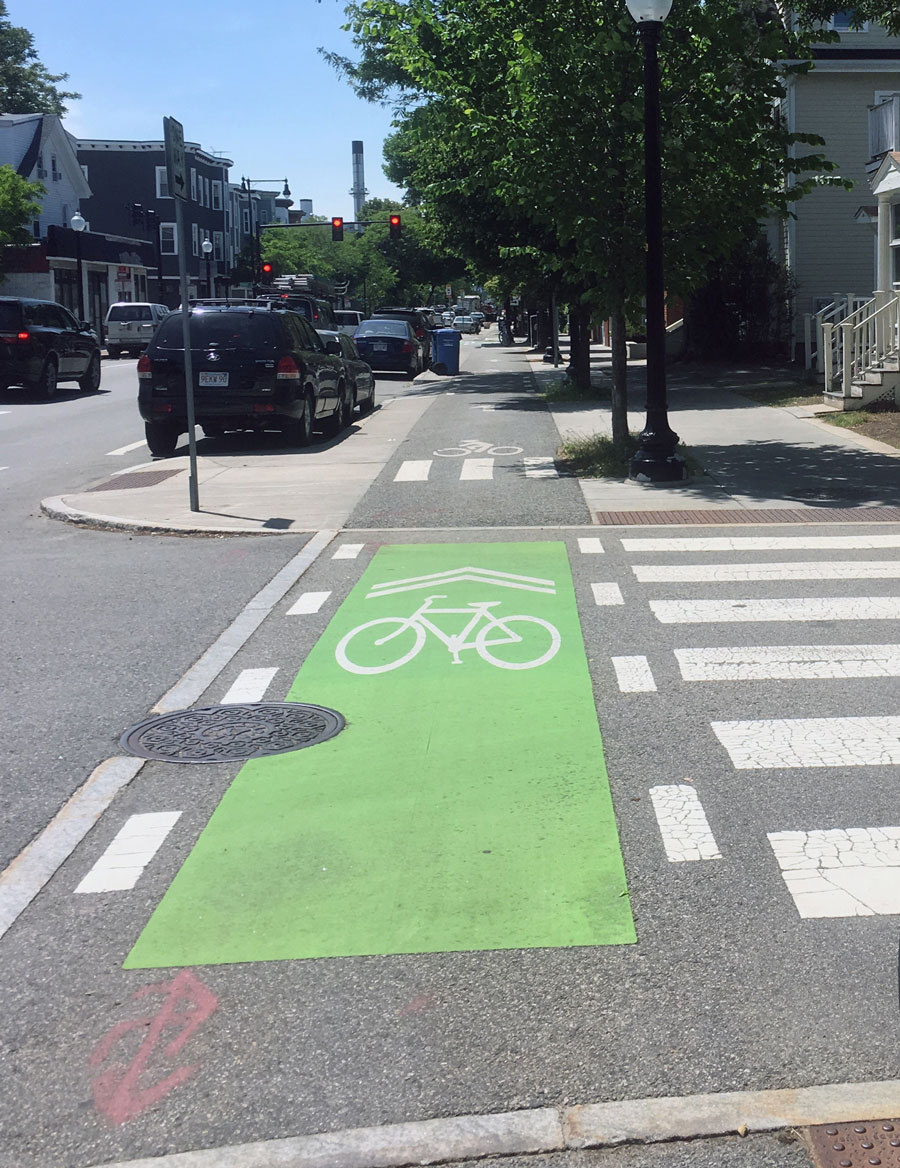
Actions to enhance intersection design and safety during the buildout of the All Ages and Abilities Network.
Bicycling 4.1
Build protected intersections along the entire bikeway network, prioritizing the All Ages and Abilities Network and High Injury Streets as identified in the Vision Zero Action Plan.
Supported goals:
Safety Mobility
Related actions:
Difficulty:
High
Timeframe:
2020-2023 (Years 0-3)
Status:
Successfully completed to date and on-going
Significant milestone(s):
Public Works looks for opportunities to build protected intersections during street reconstruction projects, safety improvement projects and bikeway projects. Some recent examples include Bryant Avenue South, Hennepin Avenue in downtown Minneapolis and the Hennepin-Dunwoody project.
Bicycling 4.2
Build median islands, curb extensions, raised crossings, signals and/or reduce the number of travel lanes along the All Ages and Abilities Network on crossings of any street types other than low volume residential streets.
Supported goals:
Safety Mobility
Related actions:
Bicycles 8.2
Difficulty:
High
Timeframe:
2020-2023 (Years 0-3)
Status:
Successfully completed to date and on-going
Significant milestone(s):
Key projects incorporating these safety improvements include Plymouth Ave N and Grand Ave S reconstruction, Whittier Safe Routes to School, Franklin Ave W reconstruction, and Queen Ave N bike boulevard.
Bicycling 4.3
Install transit islands where appropriate to ensure compatibility of protected bikeways, transit operations and people walking, with careful consideration for accessibility.
Supported goals:
Safety Equity Mobility
Related actions:
Design 5.1, Design 5.2, Design 5.3
Difficulty:
High
Timeframe:
2020-2023 (Years 0-3)
Status:
Successfully completed to date and on-going
Significant milestone(s):
Public Works evaluates transit islands where appropriate and these have been installed in numerous locations including but not limited to 3rd Ave and Washington Ave, Blaisdell Avenue South at Lake Street. The University and 4th Ave roadway improvements project will include several transit islands.