Strategy 1 Utilize land use tools to improve the efficiency of deliveries.
The actions within this strategy are divided into two categories:
Action we will DOActions we will SUPPORTAction we will do are followed by “DO” and are colored in dark gray, and actions we will support are followed by “SUPPORT” and are colored in light gray.
Learn more about how we get thereMinneapolis 2040 outlined several important freight and land use actions including:
- A production and processing policy – which aims to expand and maintain areas for production, processing, and distribution of products, services, and ideas.
- Action items in that policy that link to transportation include:
- Designate Production and Processing Areas that comprise large contiguous tracts of land historically used for industrial purposes, that are well-served by transportation infrastructure for both people and freight, and that contain building stock suitable for production and processing businesses to expand access to higher wage job opportunities.
- Prioritize use of land in Production and Processing Areas for production, processing and last mile distribution of products and services uses that have minimal or no air, water, or noise pollution impacts, and that provide quality living-wage jobs.
- Improve transit, bicycle and pedestrian access to areas of employment, including Production and Processing Areas and Production Mixed Use Areas.
- Develop guidance for future development in Production and Processing Areas and Production Mixed Use Areas served by regional transit lines in order to ensure a minimum level of development and job intensities.
- Designate Production and Processing Areas that comprise large contiguous tracts of land historically used for industrial purposes, that are well-served by transportation infrastructure for both people and freight, and that contain building stock suitable for production and processing businesses to expand access to higher wage job opportunities.
The following actions further define land use tools that can be utilized to improve the efficiency of deliveries - through smaller loading zones, consolidating freight deliveries, minimizing time needed at the curb, better securing residential deliveries and linking delivery options with other transportation efforts like mobility hubs.
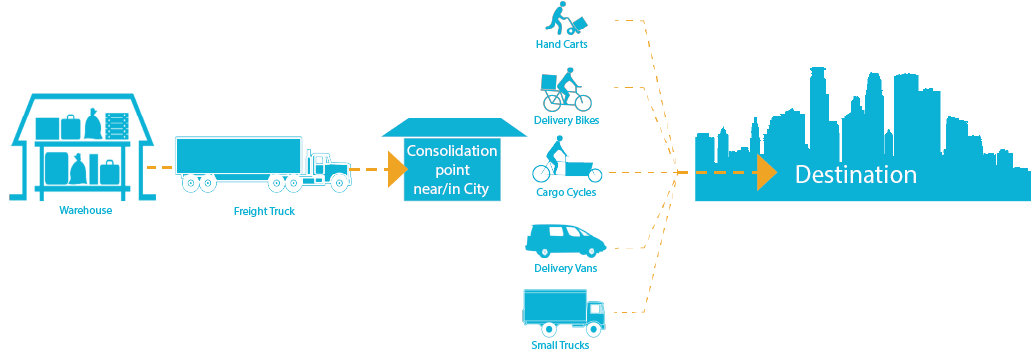
Actions to utilize land use tools to improve the efficiency of deliveries.
Freight 1.1
Work with the Minneapolis Community Planning and Economic Development Department to revise the Zoning Code to improve the efficiencies of onsite deliveries by updating onsite loading requirements for new developments.
Supported goals:
Prosperity Mobility
Related actions:
Difficulty:
Low
Timeframe:
2020-2023 (Years 0-3)
Status:
Complete
Significant milestone(s):
In May 2023, the City approved an amended version of the Zoning Code. This included modifications to onsite loading requirements for new developers.
Freight 1.2
Work with developers and property owners to develop small urban consolidation centers to break down loads and minimize the use of large vehicles for last mile deliveries, encouraging the use of low carbon modes like electric cargo bikes for final deliveries.
Supported goals:
Climate Prosperity Mobility Active Partnerships
Related actions:
Difficulty:
Medium
Timeframe:
2024-2027 (Years 4-7)
Status:
Not Started
Notes:
One of the goals of the City's SMART Grant Curb Management project is to better understand the local freight landscape through engagement with the freight industry. This engagement includes understanding opportunities for encouraging consolidation centers and low carbon last-mile delivery options.
Freight 1.3
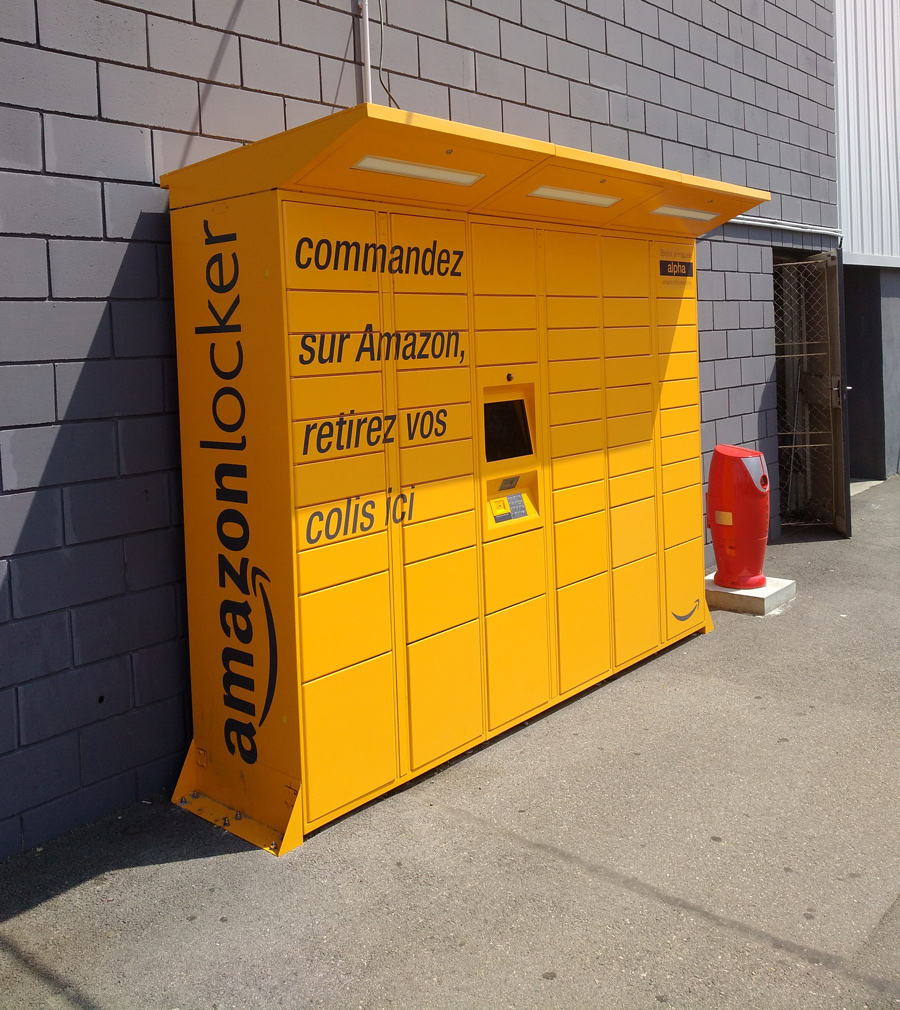
Pilot a shared locker system that can accommodate multiple e-commerce deliveries and is available to the public; focus on incorporating as component of mobility hub project.
Supported goals:
Climate Prosperity Mobility Active Partnerships
Related actions:
Technology 3.1
Difficulty:
Medium
Timeframe:
2020-2023 (Years 0-3)
Status:
In Progress
Significant milestone(s):
An Amazon locker pilot is underway at Hawthorne Transportation Center. These lockers accommodate only one e-commerce provider and is not related to a mobility hub project. Public Works is investigating the feasibility of public package lockers to be incorporated in future regional mobility hubs.
Freight 1.4
Use available tools and regulatory authority to coordinate delivery services for businesses in the same building or block, potentially including coordinating time of day, sharing delivery service providers and sharing use of loading dock space.
Supported goals:
Climate Prosperity
Related actions:
Difficulty:
High
Timeframe:
2030+
Status:
Not Started
Notes:
This action has not been started. This action will be reconsidered as part of the 2030 TAP Update.
Freight 1.5
Coordinate with the Department of Community Planning and Economic Development to mandate that private developments design buildings to accommodate increased online package delivery.
Supported goals:
Prosperity Active Partnerships
Related actions:
Difficulty:
Low
Timeframe:
2030+
Status:
Not Started
Notes:
This action has not been started. This action will be reconsidered as part of the 2030 TAP Update.
Freight 1.6
Investigate the feasibility of implementing a time restricted truck free zone, potentially through revisions to ordinance 486.50, to create more restrictive requirements for large vehicle operations.
Supported goals:
Climate Equity Prosperity Mobility
Related actions:
Difficulty:
High
Timeframe:
2028-2030 (Years 8-10)
Status:
Not Started
Notes:
This action has not yet been started. Public Works remains supportive of this action.
Freight 1.7
Maintain and maximize the use of the existing commercial and residential alley network for deliveries, especially in commercial and business nodes.
Supported goals:
Prosperity Mobility
Related actions:
Difficulty:
Low
Timeframe:
2028-2030 (Years 8-10)
Status:
Not Started
Notes:
The City continues to maintain alleys for delivery uses. Public Works remains open to exploring ways to maximize the use of alleys in commercial and business nodes.
Freight 1.8
Standardize a process to identify and mitigate loading and circulation impacts to nearby properties if an alley must be vacated.
Supported goals:
Prosperity Mobility
Related actions:
Difficulty:
Low
Timeframe:
2020-2023 (Years 0-3)
Status:
Complete
Significant milestone(s):
When an alley is planned to be vacated, the project goes through a Planned Development Review process. As part of this review process, Public Works identifies potential loading and circulation impacts. Alleys may only be vacated in unique circumstances.