Strategy 2 Foster vibrant public spaces for street life.
The actions within this strategy are divided into two categories:
Action we will DOActions we will SUPPORTAction we will do are followed by “DO” and are colored in dark gray, and actions we will support are followed by “SUPPORT” and are colored in light gray.
Learn more about how we get thereStreets are spaces where people travel through but also where people gather, meet, socialize, and speak up as a part of our democracy. This strategy aims to create more attractive places within the public right of way that are inviting, that encourage people to linger and enjoy the city where they live, work or play. Many initiatives that support people enjoying public space also have multiple benefits, for example, added greenery helps contain stormwater and can treat stormwater through water purification naturally before entering the city’s waterways.
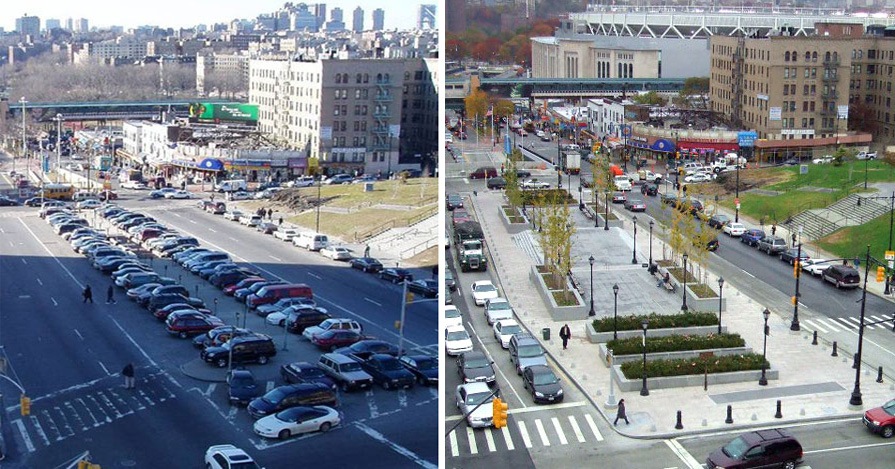
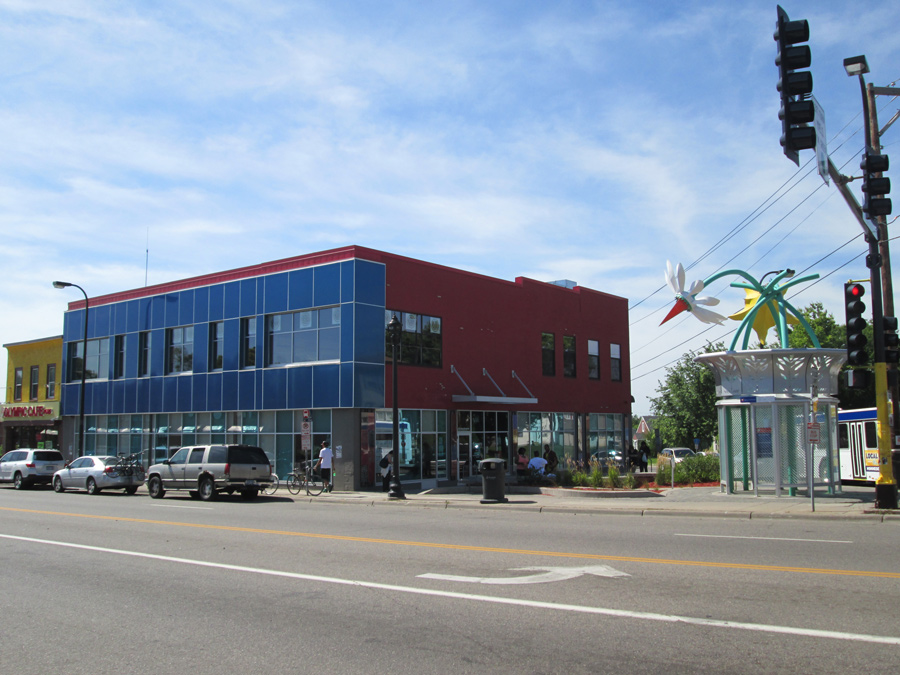
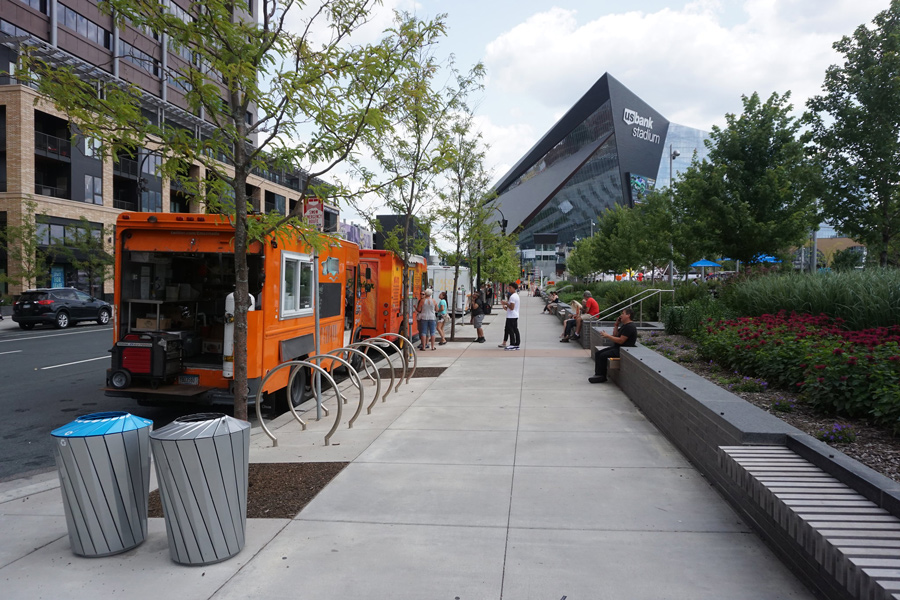
Actions to foster vibrant public spaces for street life.
Design 2.1
Create a Minneapolis Plaza Program to convert underused street space for pedestrians, greening and green infrastructure using guidance from the plaza standards in the Minneapolis Zoning Code.
Supported goals:
Climate Prosperity Active Partnerships
Related actions:
Difficulty:
Medium
Timeframe:
2030+
Status:
In Progress
Notes:
A new program, BP008 Public Space Program, was included in the 2022-2027 Capital Improvement Program. Due to budgetary constraints and staff availability, the program work is currently on hold. Projects in this program will begin if and when budget allows.
Design 2.2
Revamp the existing courtesy bench program (Minneapolis Ordinance 283) and create a new request process for installing benches and potentially other street furniture.
Supported goals:
Equity Prosperity
Related actions:
Difficulty:
Medium
Timeframe:
2028-2030 (Years 8-10)
Status:
Not Started
Notes:
This action is not started as of 2025. Program modifications will require coordination between Public Works and other City departments such as Community Planning & Economic Development.
Design 2.3
Coordinate with the Minneapolis Community Planning and Economic Development Department to simplify the process to ‘paint the pavement’ through creative crosswalks, murals, and other art in the public right of way.
Supported goals:
Prosperity Active Partnerships
Related actions:
Difficulty:
Medium
Timeframe:
2024-2027 (Years 4-7)
Status:
In Progress
Notes:
Public Works coordinates with the Arts & Cultural Affairs Department annually to ensure that paint the pavement guidelines align with transportation standards from the Federal Highway Administration and Manual on Uniform Traffic Control Devices. While pavement painting projects across the city have increased since 2020, no formal changes to the public art application process or eligibility requirements have been made to-date.
Design 2.4
Establish the parklet and street café programs as permanent seasonal programs instead of pilot programs.
Supported goals:
Prosperity Active Partnerships
Related actions:
Difficulty:
Low
Timeframe:
2020-2023 (Years 0-3)
Status:
Complete
Significant milestone(s):
In 2023, Public Works established the parklet and street café programs as permanent seasonal programs. See the parklet and street café programs.
Design 2.5
Explore opportunities for car-free streets, implement pilots, and make permanent improvements.
Supported goals:
Climate Safety Prosperity Mobility
Related actions:
Difficulty:
High
Timeframe:
2024-2027 (Years 4-7)
Status:
Successfully completed to date and on-going
Significant milestone(s):
As of 2025, Public Works has explored opportunities for car-free streets or ongoing temporary closures as part of design processes for various projects. The City approved the use of 10th Ave and 21st Ave N as transit greenways for the Blue Line Extension project.
Design 2.6
Consolidate or eliminate existing curb cuts and minimize new curb cuts for vehicle access across sidewalks during street and development projects.
Supported goals:
Safety Equity Mobility
Related actions:
Walking 7.1, Walking 7.2, Walking 7.3, Walking 7.4, Walking 7.5, Walking 7.6
Difficulty:
Medium
Timeframe:
2020-2023 (Years 0-3)
Status:
Successfully completed to date and on-going
Significant milestone(s):
The Street Design Guide includes guidance for project designers to explore changes to driveway configurations during street reconstructions and site plan reviews. For example, changes to driveway and curb cut configurations are proposed for upcoming construction projects such as the 9th/10th St corridor improvements and Park/Portland Ave Safety improvements.
Design 2.7
Collaborate with community to develop and implement a long-term vision for the public infrastructure at the intersection of 38th Street and Chicago Avenue, including designs that are conducive to allowing space for a memorial to honor George Floyd.
Supported goals:
Equity Prosperity Active Partnerships
Related actions:
Difficulty:
High
Timeframe:
2024-2027 (Years 4-7)
Status:
In Progress
Significant milestone(s):
On December 11, 2025, Minneapolis City Council approved the concept layout for the 38th & Chicago Re-Envisioned project to reconstruct about 0.5 miles of Chicago Avenue and 38th Street. This work will happen on 38th Street from Park Avenue to 10th Avenue and on Chicago Avenue from 37th Street to 39th Street. The community-driven design includes flexible space for gatherings, art and memorials, pedestrian safety and traffic calming, green space and stormwater management, restored transit service, new all ages and abilities bikeways, access to homes and businesses, and on-street parking.
See also actions:
- Walking 2.5
Covert slip lanes to community space - Bicycling 3
Neighborhood greenways - Bicycling 10.2
Open Streets Minneapolis is sustainable and evolves - Technology 3.1
Implement mobility hub network