Strategy 4 Green the streets.
The actions within this strategy are divided into two categories:
Action we will DOActions we will SUPPORTAction we will do are followed by “DO” and are colored in dark gray, and actions we will support are followed by “SUPPORT” and are colored in light gray.
Learn more about how we get thereGreen street elements bring life to the street, capture carbon from the air, reduce heat island effects and provide critical stormwater management function to reduce localized flooding and improve water quality. We will seize opportunities as we make improvements to streets to increase functional and aesthetic street treatments that contribute to climate benefits in the city. Functional elements treat and/or contain stormwater before entering the larger stormwater network. Aesthetic treatments include public realm improvements like plantings, boulevards and trees that help contribute to a sense of place.
Greening the streets helps to rectify the impacts of past street design and land use decisions that resulted in more impervious surface and less green cover in areas of the city that suffered racist redlining housing policy. Even today, neighborhoods in Minneapolis can face a 10 degree difference in heat depending on green coverage.1
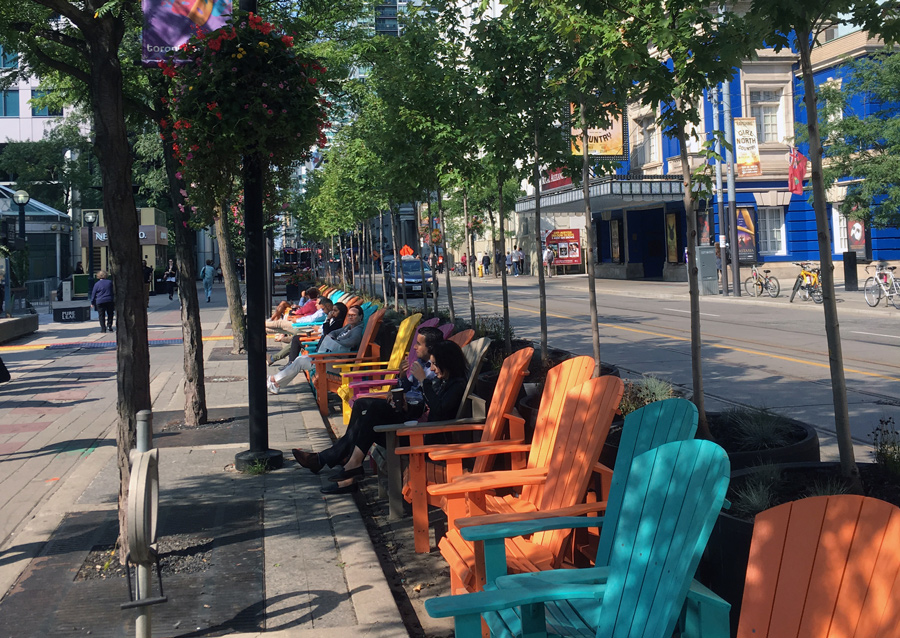
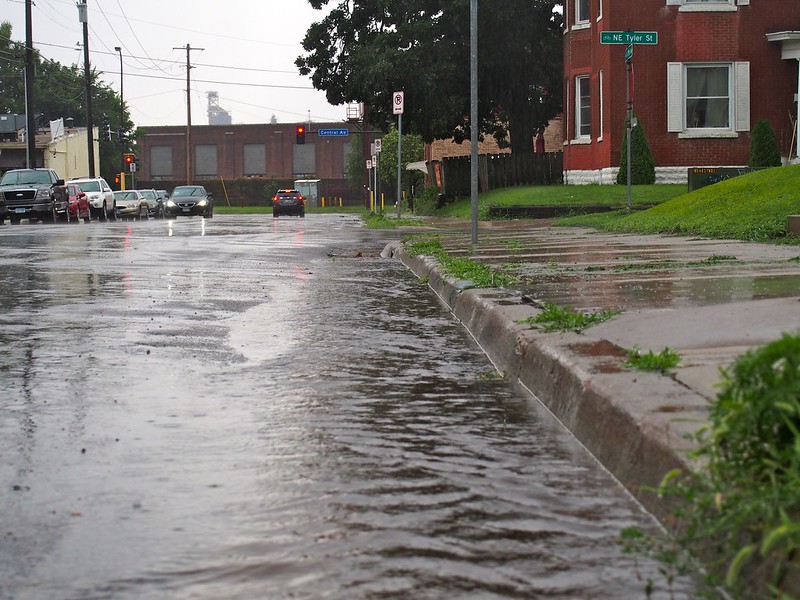
- "Racist housing policies have created some oppressively hot neighborhoods", National Geographic
Actions to green the streets
Design 4.1
Build and maintain stormwater infrastructure into streets, using features such as vegetation and bioswales to reduce runoff and treat water prior to entering waterways.
Supported goals:
Climate Active Partnerships
Related actions:
Difficulty:
Medium
Timeframe:
2020-2023 (Years 0-3)
Status:
Successfully completed to date and on-going
Significant milestone(s):
In the 2024-2025 construction seasons, 120 green stormwater infrastructure (GSI) and sustainable landscaping facilities were installed. In 2022, the updated Stormwater Ordinance began applying to transportation projects in the City. GSI and sustainable landscaping are maintained by contractors.
Design 4.2
Experiment with soil additives such as biochar, fly ash, and iron fillings to retain pollutants, encourage vegetation growth and help street trees and plants survive in harsh winter conditions.
Supported goals:
Climate
Related actions:
Difficulty:
Medium
Timeframe:
2020-2023 (Years 0-3)
Status:
Successfully completed to date and on-going
Significant milestone(s):
Public Works installed soil with biochar additives on projects in the 2024 and 2025 construction seasons. In 2026-2027, Public Works will develop a long-term Green Stormwater Infrastructure (GSI) monitoring plan. The long-term monitoring will include evaluations of soil additive effectiveness at reducing phosphorus leaching and improving plant health and GSI function.
Design 4.3
Add greening elements to streetscapes to support the comfort and pleasure of people using the streets, as bikeway protection where appropriate, around transit stops and stations, and in high volume pedestrian areas.
Supported goals:
Climate Active Partnerships
Related actions:
Difficulty:
Medium
Timeframe:
2020-2023 (Years 0-3)
Status:
Successfully completed to date and on-going
Significant milestone(s):
When possible, Public Works adds greening elements to streetscapes during reconstruction, safety projects, and other street projects in order to improve comfort and enjoyment for people using streets. Public Works continues to evaluate ways to add and maintain more greening in street projects.
Design 4.4
Explore creating a program to proactively install street trees or other greening elements in underutilized parking spaces, either permanently and/or temporarily.
Supported goals:
Climate Equity
Related actions:
Difficulty:
Low
Timeframe:
2024-2027 (Years 4-7)
Status:
In Progress
Notes:
Public Works is exploring funding sources and implementation options for adding street trees and other greening elements to underutilized parking areas and other locations within the public right-of-way. Greening is considered for replacing under-utilized parking areas during street reconstruction projects. Some examples include Grand Ave S and Bryant Ave S.
Design 4.5
Increase the tree canopy and urban forest coverage by 2040 by working with the Minneapolis Park and Recreation Board to preserve and enhance trees in the City’s right of way. Prioritize coverage where it least exists and in high scoring Transportation Equity Priority areas.
Supported goals:
Climate Equity Active Partnerships
Related actions:
Difficulty:
Medium
Timeframe:
2020-2023 (Years 0-3)
Status:
Successfully completed to date and on-going
Significant milestone(s):
Public Works collaborates with the Minneapolis Park and Recreation Board on all relevant street projects to preserve and enhance tree canopy in City Right of Way. Public Works prioritizes projects in Transportation Equity Priority areas through the capital program project selection process.