Strategy 3 Formulate public-private partnerships to implement innovative, ambitious and scalable pilots.
The actions within this strategy are divided into two categories:
Action we will DOActions we will SUPPORTAction we will do are followed by “DO” and are colored in dark gray, and actions we will support are followed by “SUPPORT” and are colored in light gray.
Learn more about how we get thereTechnology innovations in transportation are primarily being developed and deployed by the private sector; public agencies have the role of regulating and permitting their use on city streets as right of way managers. The partnerships with both the private sector and other public agencies are critical to our ability to deploy safe and successful pilots. All pilots are selected to help determine permanent advanced mobility implementations.
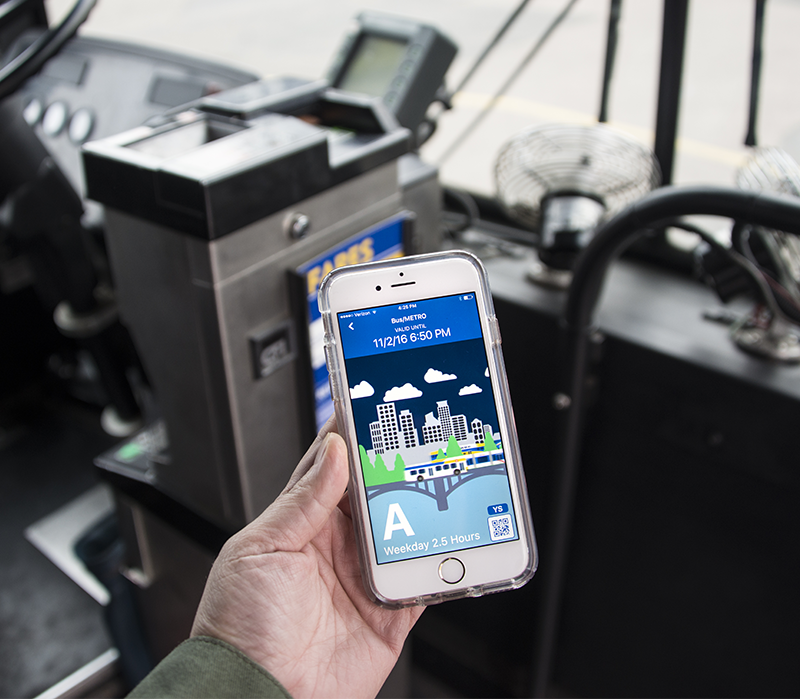
Mobility as a Service, the concept of a multimodal trip planning and payment as a subscription service through one virtual platform, presents a partnership opportunity. Working with regional partners such as Metro Transit, as well as private service and application providers, to enable the deployment of Mobility as a Service will help people take into account environmental, personal health, financial, and time considerations when trip planning. Our approach allows for compatibility with mobility providers and utilizes open data to allow for multiple private platforms.
Financial incentives can change how people travel. This can benefit their health and the envrionment.
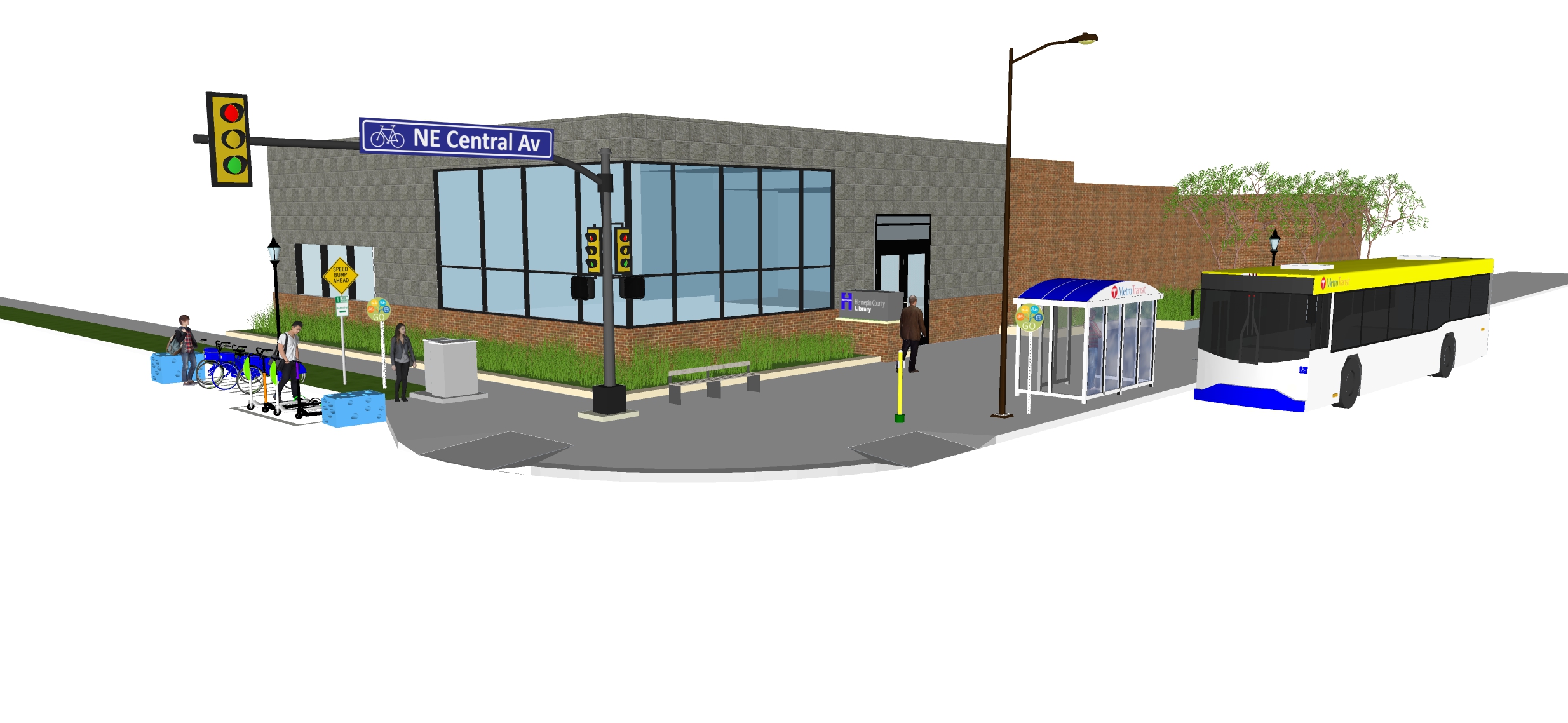
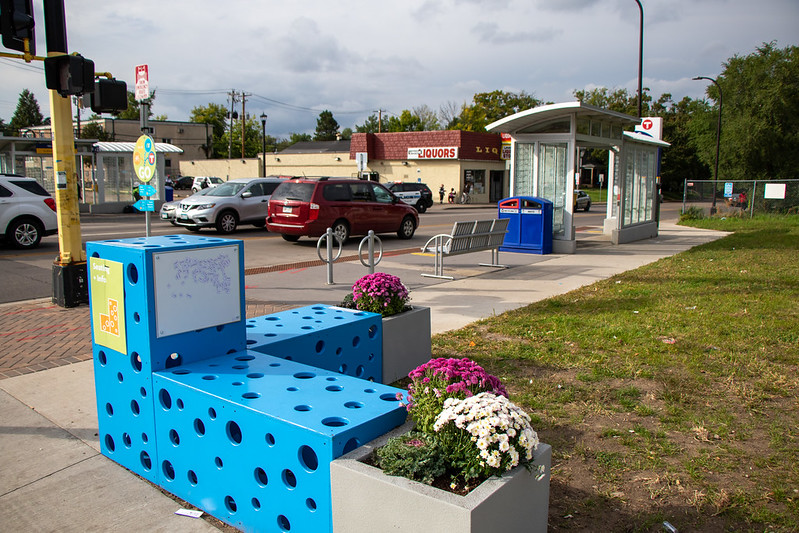
Another key opportunity for partnering regionally is to pilot and deploy mobility hubs. Mobility hubs are physical places where people can connect to multiple modes of transportation to make their trip as safe, convenient, and reliable as possible. Most hubs are centered on transit connections, where multiple modes are available to extend the reach of transit. Bicycle and micromobility parking, car share vehicles, and wayfinding and real time information are all potential components of mobility hubs.
Actions to formulate public-private partnerships to implement innovative, ambitious and scalable pilots.
Technology 3.1
Implement a network of mobility hubs in partnership with Metro Transit. Mobility hubs will be designed to connect transit with other shared mobility services such as bikeshare, scooter share and carshare. Mobility hubs will vary in scale based on context, space and viability and may have placemaking, vehicle charging and wayfinding features.
Mobility hubs are places where people can connect to multiple modes of transportation to make their trip as safe, convenient and reliable as possible.
Supported goals:
Mobility Active Partnerships
Related actions:
Walking 8.1, Transit 5.1, Transit 5.2
Difficulty:
High
Timeframe:
2020-2023 (Years 0-3)
Status:
Complete
Significant milestone(s):
In 2022, the City received Regional Solicitation funding to establish marquee mobility hubs in partnership with Metro Transit. Four of these mobility hubs will be within the City of Minneapolis. Between 2020 and 2025, Public Works has expanded mobility hubs from about 20 to 60 hub locations in the city.
Technology 3.2
Work with public and private partners and community-based organizations to evaluate future mobility hub locations and ensure that the geographic placement of mobility hubs prioritizes locations in Transportation Equity Priority areas.
Supported goals:
Equity Mobility Active Partnerships
Related actions:
Difficulty:
Medium
Timeframe:
2020-2023 (Years 0-3)
Status:
Complete
Significant milestone(s):
Public Works continues to expand mobility hub locations, ensuring that locations in Transportation Equity Priority tiers 1 and 2 are prioritized whenever feasible.
Technology 3.3
Collaborate with public and private partners to enable a virtual platform for accessing and paying for transit and shared mobility services, including a multimodal subscription package.
Supported goals:
Equity Prosperity Mobility Active Partnerships
Related actions:
Transit 5.1, Transit 5.2
Difficulty:
High
Timeframe:
2024-2027 (Years 4-7)
Status:
Successfully completed to date and on-going
Significant milestone(s):
Public Works requires providers in the shared bike and scooter program to use an open API, per their license agreement. As of 2025, the City is developing a scope for a mobility as a service (MaaS) pilot program which would allow for easier access and payment for mobility services.
Technology 3.4
Work with the Metropolitan Council and Metro Transit to expand app-based vanpool and carpool.
Supported goals:
Climate Prosperity Mobility Active Partnerships
Related actions:
Operations 4.1, Operations 4.2, Operations 4.3, Operations 4.4
Difficulty:
Medium
Timeframe:
2030+ (Years 10+)
Status:
Not Started
Notes:
The City will support Metro Transit in further expansion of app-based vanpool and carpool if and when support is needed.
Technology 3.5
Work with the Metropolitan Council and Metro Transit to pilot a microtransit service within Minneapolis and the greater Twin Cities region.
Supported goals:
Equity Mobility Active Partnerships
Related actions:
Operations 4.1, Operations 4.2, Operations 4.3, Operations 4.4
Difficulty:
Medium
Timeframe:
2028-2030 (Years 8-10)
Status:
Complete
Significant milestone(s):
Metro Transit launched a pilot of their Metro Transit Micro service in North Minneapolis in 2022.
See also actions:
- Transit 5.2
On demand mobility services - Transit 7.3
Transit